Search
Format
Level
Tag
Detail
-
image
Senate current numbers
This image shows the current numbers in the Senate.
-
image
House of Representatives current numbers
This image shows the numbers in the House of Representatives.
-
audio
The Australian Constitution audio
Listen to the complete text of the Australian Constitution.
The full written text of the Australian Constitution can be read on The Australian Constitution online website.
-
inFocus
The Australian Constitution in focus
The Australian Constitution is the legal framework for how Australia is governed. This paper explores in detail the history of the Constitution, its key features and the High Court’s role in interpreting it.
-
interactive
Parliament, Executive and Judiciary
Explore how the power to make and manage law is shared in Australia with this interactive. It can be used in the classroom to illustrate the separation of powers.
-
interactive
Federal, state and local
Do you know what each level of government is responsible for? Test your knowledge of the three levels of government in Australia with this game. Use in the classroom or just for fun.
-
inFocus
Three levels of government: governing Australia
In Australia the three levels of government work together to provide us with the services we need. This in-depth paper explores the roles and responsibilities of each level, how they raise money and how they work together. Case studies show how the powers of the Australian Parliament have expanded.
-
Session Notes: our teacher newsletter
The Session Notes teacher newsletter features news from the Parliamentary Education Office. Find out about new resources and programs, and how the PEO can help you teach about the Australian Parliament.
-
interactive
Pass the bill
This interactive details each step of the law-making process in the Australian Parliament. Users follow the progress of a bill to lower the voting age to 16 through the Australian Parliament. Perfect for use in the classroom.
-
inFocus
A short history of Parliament
Compared to some other parliaments around the world, Australia's Parliament is quite young but it is based on practices and ideals from much older parliaments. This in-depth paper explores the development of the Westminster system in Britain and parliamentary democracy in Australia.
-
inFocus
The Federation of Australia
Australia's Federation came about through a process of deliberation, consultation and debate. This in-depth paper explores the reasons for Federation, the Federation conventions and the referendums in which the Australian people decided to join together as a nation.
-
inFocus
Australia's Parliament House
This in-depth look at Australia's Parliament House investigates why Canberra was chosen to be the nation's capital and why we needed a 'new' Parliament House. It includes the design, site and symbolism of the building.
-
interactive
Chatterboxes
These fun to make chatterboxes feature questions and answers about parliamentary processes and the history of our Parliament. Quiz your students or challenge them to write their own questions using the templates.
-
website
To our last shilling: the Australian Parliament and World War I
Discover Australia’s experience of the First World War from the perspective of the Australian Parliament. From fixing the price of food to interning ‘enemy aliens’, the decisions made by the Parliament during the War affected the lives of everyday Australians.
-
Self-paced interactive learning
Whether you're new to teaching civics, a seasoned educator, a pre-service teacher, or a curriculum leader – our free, self-paced, interactive courses are designed for you.
-
image
Four key ideas of Australian democracy
This graphic illustrates the 4 supporting ideas of Australian democracy.
-
image
The usual path of a bill
This graphic illustrates the usual path of a bill through the Australian Parliament to become Australian law.
-
image
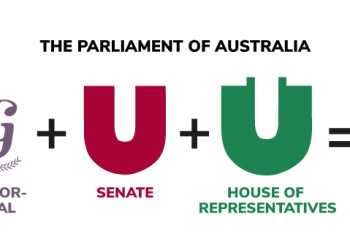
Parliament of Australia
This graphic illustrates the composition of the Australian Parliament.
-
image
People in Parliament
This graphic shows some positions in the Australian Parliament and how they relate to each other.
-
image
How to form a political party
This graphic shows the steps required to form a political party in Australia.
-
image
The role of the Senate
This graphic illustrates the role of the Australian Senate.
-
image
The role of the House of Representatives
This graphic illustrates the role of the House of Representatives.
-
image
From policy to law
This graphic illustrates the role of the executive government in turning policy into law.
-
inFocus
Rights in Australia
This paper investigates the framework of rights in Australia. It defines the different types of rights, including human rights, and looks at the many sources for our rights and how they are protected.
-
Our commitment to child safety
The Parliamentary Education Office is committed to providing a safe and respectful environment for young people and children. Find out how we are doing this and how you can report a complaint.
-
factsheet
Senate
This fact sheet explores the Senate, which is part of the Australian Parliament. It includes information about the role, appearance and origins of the Senate.
-
factsheet
Mace
The Mace is the symbol of the House of the Representatives. This fact sheet includes information about its function, design and history.
-
factsheet
Black Rod
The Black Rod is a ceremonial staff carried by the Usher of the Black Rod while doing Senate work. With this fact sheet you will learn about the design, function and history of the Black Rod.
-
factsheet
Members of the House of Representatives
Discover the work of members of the House of Representatives in this fact sheet. It explores their role in the Australian Parliament and in their local community, their working hours and period of service.
-
factsheet
Despatch Boxes
This fact sheet explores the function, design and history of the Despatch Boxes that sit on the central table in the House of Representatives.
-
factsheet
Hansard
The official written record of what is said in the Australian Parliament is called Hansard. This fact sheet explores the role of Hansard, why and how it is produced and its history.
-
factsheet
Frontbenchers and backbenchers
This fact sheet investigates the work of frontbenchers (members of parliament who sit on the front seats of either the Senate or House of Representatives) and backbenchers (members of parliament who sit in the rows of seats behind the frontbench).
-
factsheet
Standing orders
Standing orders are the rules used to manage the work of the Senate and the House of Representatives. This fact sheet explains how the standing orders are used in Parliament and how they can be changed.
-
factsheet
Independents
An independent is a member of the Australian Parliament who does not belong to a political party. This fact sheet explores their role and how they can vote in the Parliament.
-
factsheet
Budget
This fact sheet explores the Australian Government’s annual statement of how it plans to collect and spend money.
-
factsheet
Parliament House
This fact sheet explores the building where the Australian Parliament meets. Discover key facts about the building and the symbolism of its design.
-
factsheet
Governor-General
The Governor-General is the King’s representative in Australia. This fact sheet explains their role, including their part in the law-making process.
-
factsheet
Opposition
Discover the opposition – the largest party or coalition of parties not in government – with this fact sheet. The opposition is sometimes called the ‘alternative government’ and has an important role closely examining the work of the government.
-
factsheet
Petitions
Petitions ask the Australian Parliament to act on an issue. This fact sheet explains the rules petitions must follow and how petitions are presented to the Parliament.
-
factsheet
Crossing the floor
If a member of a parliamentary party votes against their party it is called ‘crossing the floor’. This fact sheet explores how and when this happens and the possible outcomes of crossing the floor.
-
factsheet
Delegated law
Delegated law gives government ministers and others the power to make decisions about the details of laws passed by the Australian Parliament. This fact sheet explains how regulations and other types of delegated law are made and overruled.
-
factsheet
Serjeant-at-Arms
The Serjeant-at-Arms is a parliamentary officer in the House of Representatives. This fact sheet explores their role and the history of the position.
-
factsheet
Referendums and plebiscites
A referendum is a vote of the Australian people on a proposed change to the Australian Constitution, while a plebiscite is a vote on an issue that does not affect the Constitution. This fact sheet explores the process of referendums and plebiscites in Australia.
-
factsheet
Cabinet
Cabinet is the top decision-making group within the Australian Government. Find out more about who is in Cabinet and how it works with this fact sheet.
-
factsheet
Law-making
This fact sheet explains the law-making process in the Australian Parliament. It also describes where ideas for laws come from and the history of law-making in the Parliament.
-
factsheet
Question Time
This fact sheet explores Question Time, the time when the Australian Parliament examines the work of the government by asking them questions. It happens each sitting day in the Senate and the House of Representatives.
-
factsheet
Prime Minister
Understand the role of the Prime Minister with this fact sheet, including how the Prime Minister is chosen and their responsibilities.
-
factsheet
Committees
Parliamentary committees investigate issues and proposed laws in detail. This fact sheet explains the role of committees, how they work and the types of committees in the Australian Parliament.
-
factsheet
Federation
In 1901, 6 British colonies united to become a new nation – the Commonwealth of Australia. This fact sheet examines the reasons for Federation, the path to Federation, the creation of the territories and the opening of the Australian Parliament.
-
factsheet
Senators
Discover the work of senators in this fact sheet. It explores their role in the Australian Parliament and in the community, their working hours and period of service.
-
factsheet
Government
This fact sheet explores the responsibilities of the Australian Government, how it is formed, minority government and the principle of responsible government.
-
factsheet
Democracy
This fact sheet introduces the idea of democracy and explores the key ideas which support Australia’s democratic system of government.
-
factsheet
Separation of powers: Parliament, Executive and Judiciary
The separation of powers distributes the power to govern between the Parliament, the Executive and the Judiciary. This fact sheet examines the powers of each group and the related principle of responsible government.
-
factsheet
The responsibilities of the three levels of government
This fact sheet introduces the three levels of government in Australia and lists some of the responsibilities of each level.
-
factsheet
Double dissolution
What happens when there is a deadlock between the Senate and the House of Representatives? This fact sheet explores double dissolutions and joint sittings of the Australian Parliament.
-
factsheet
House of Representatives
This fact sheet explores the House of Representatives, which is part of the Australian Parliament. It includes information about the role, appearance and origins of the House of Representatives.
-
factsheet
Press gallery
Understand the role of the press gallery and its relationship with members of parliament and the public with this fact sheet.
-
factsheet
Senate estimates
Several times a year, senators investigate how the government is spending public money in meetings called Senate estimates. This fact sheet examines the purpose, function and timing of Senate estimates.
-
factsheet
Party whip
This factsheet explains the role of the party whip in Parliament including how they help keep political teams organised and working together.
-
factsheet
Australian system of government
This fact sheet examines Australia’s system of government. It includes information about representative democracy, constitutional monarchy, federation and the separation of powers.
-
factsheet
Speaker of the House of Representatives
Understand the role of the Speaker of the House of Representatives with this fact sheet. It includes information about how the Speaker is chosen, their role in the House and the history of the position.
-
factsheet
Australian Parliament
This fact sheet outlines the composition and role of the Australian Parliament.
-
factsheet
Australian Constitution
This fact sheet explores the Australian Constitution. It includes information about the key features of the Constitution and how it can be changed.
-
factsheet
Rule of law
The rule of law is a key feature of Australia’s democracy and legal system. This fact sheet explains the principle of the rule of law and its relationship to the separation of powers.
-
factsheet
Usher of the Black Rod
Understand the role of the Usher of the Black Rod with this fact sheet. It describes their duties in the Senate and in the department, and the history of the position.
-
factsheet
Ministers and shadow ministers
Understand the role of minsters and shadow ministers with this fact sheet. It describes what a minster is, how they are chosen and what their role is.
-
factsheet
Magna Carta
This fact sheet explores the Magna Carta – the ‘Great Charter’. It includes information about the history of the Magna Carta and its importance in the development of democracy and human rights.
-
factsheet
Records of the Parliament
Official records are kept of everything that is said and done in the Australian Parliament. This fact sheet explores these official records, including Hansard, Journals of the Senate and Votes and Proceedings.
-
factsheet
Political parties
Political parties aim to have members elected to parliament. In this fact sheet, learn more about why they exist, how they are formed and how they are organised.
-
factsheet
Leader of the Opposition
Get to know the role of the Leader of the Opposition with this fact sheet. Learn how the Leader of the Opposition is chosen and their responsibilities.
-
factsheet
Getting involved in Parliament
This fact sheet explores some of the ways that Australians can get involved in the Australian Parliament. It includes information on elections, contacting members of parliament, committees and protesting.
-
factsheet
Federal elections
This fact sheet explores how federal elections are used to select representatives in the Australian Parliament. It covers the process of electing senators and members of the House of Representatives.
-
factsheet
Amendments
An amendment is a change to a proposed law. Amendments are an important part of the law-making process in the Australian Parliament. This fact sheet outlines the amendment process.
-
factsheet
Voting in Parliament
Learn about voting in Australian Parliament with this fact sheet. It explains the 2 types of voting methods used to make decisions, and what happens when a vote is tied.
-
factsheet
National symbols in Parliament House
This fact sheet gives details about some of Australia's national symbols and where they are featured in Australian Parliament House. It explains the history and significance of Australia’s Coat of Arms, flags and floral emblem.
-
factsheet
From election to a new Parliament
Regular federal elections are an important feature of Australia’s democracy. Investigate the process of closing Parliament, the transition between Parliaments and the opening of a new Parliament in Australia with this fact sheet.
-
factsheet
Sources of law
This fact sheet introduces the different ways law is made Australia – statute law made by parliament, delegated law made by the Executive government and common law made in courts.
-
factsheet
Parliament and the courts
This fact sheet outlines the relationship between the Australian Parliament and federal courts, including the separation of powers and key High Court of Australia cases that have impacted the powers of the Australian Parliament.
-
Teacher Feedback Group
Thank you for your interest in joining our teacher feedback group. The Parliamentary Education Office (PEO) is seeking your expertise in the review of our programs, resources and services with the aim of providing contemporary, relevant and engaging experiences for teachers, students and the general public.
-
factsheet
Rights
On this fact sheet, find out about where rights in Australia come from, types of rights and how rights are considered when Parliament makes laws.
-
interactive
Build your own budget
Be the Australian Government and create your own budget. Decide how to spend your billions of tax-payer dollars.
-
factsheet
The monarch
This fact sheet explains the role of the monarch in the Australian Parliament. Find out why Australia has the King as our head of state and what power the King has in Australia.
-
interactive
Discover Parliament House
Explore the different areas of Parliament House in this interactive model by selecting the labels.
-
interactive
Will your referendum pass?
Change the results of a referendum to see if it is successful.
-
interactive
What senators do in the Australian Parliament
Tap on the icons to explore the work that senators do in Parliament and their state or territory.
-
interactive
What members do in the Australian Parliament
Tap on the icons to explore the work that members of the House of Representatives do in Parliament and their electorates.
-
factsheet
Minor parties
Learn about the role of minor parties in the Australian Parliament with this fact sheet. Find out how minor parties can hold the balance of power and influence a hung parliament.
-
image
Preferential voting example
This graphic illustrates the process of distributing votes to elect a member in the House of Representatives.
-
Statistics of the 47th Parliament
View the facts and figures of the work of the 47th Australian Parliament.
-
image
How governments in Australia raise and spend money
This graphic illustrates the how the three different levels of government get their income and what they spend it on.
-
factsheet
National Cabinet
National Cabinet is a meeting where leaders of the Australian and state and territory governments work together. Find out more about how National Cabinet works with this fact sheet.
-
Overview
Overview by the Australian Government Solicitor.
-
Foundations
Australia’s system of government was influenced by the British and United States systems. The parliamentary and executive aspects of Australia’s political system come mainly from Britain, while the Australian federal design is derived mainly from the US. Explore the links below to find out more about the documents and the history which shaped our Constitution.
-
Journey towards independence
At the time of Federation over three-quarters of the population were Australian-born. Over time people began to identify as Australian rather than British and this led to greater independence for our system of government and legal framework. The documents below changed Australia’s relationship with Britain and strengthened our sense of national identity.
-
image
Rules and laws
This graphic illustrates differences between rules and laws.
-
image
How to change the Australian Constitution
This graphic illustrates the process to change the Australian Constitution.
-
image
Double majority
This graphic illustrates the double majority requirement to change the Australian Constitution.
-
Parliament and its people
The Australian Parliament is made up of the King—represented by the Governor-General—the Senate and the House of Representatives. Discover the Parliament, the Australian Government, opposition, and the people who help the Parliament do its work.
-
History of Parliament
The Australian Parliament is over 100 years old but some of its practices and traditions are centuries older. Explore the history of the Australian Parliament including the Magna Carta, federation, the First World War and more recent milestones.
-
Units of work
Explore parliamentary education in the classroom with these units of work aligned to the Australian Civics and Citizenship Curriculum V9.0.
-
People in Parliament
Meet the people who work in the Australian Parliament. From the Prime Minister to the media, hundreds of people participate in and make sure Parliament can do its work.
-
Government
The Australian Government puts Australian law into action, provides government services and makes decisions on behalf of the nation. Learn more about the Australian Government, including how it is formed, Cabinet and its role.
-
Bills and laws
Everything you need to know about the law-making process in the Australian Parliament. Discover the path of a bill, how laws are changed and the different types of laws.
-
Getting involved
Explore the ways you can have your say and contribute to the work of the Australian Parliament. From voting to petitions, contacting members of parliament to protesting, there are many ways Australians can have their voice heard in Parliament.
-
How Parliament works
Experience the work of the Parliament with these adaptable classroom activities.
-
Images and copyright/privacy/disclaimer
We encourage you to reuse content from the PEO website. Find out the copyright requirements of the site, and read our privacy statement and website disclaimer.
-
quiz
Australian Parliament
Test your understanding of the history, make-up and people of the Australian Parliament with this quick quiz.
-
quiz
Getting involved
There are many ways Australians can have their say about decisions made by the Australian Parliament. Take this quiz to discover some ways you can get involved.
-
quiz
Separation of powers
Test your knowledge of the separation of powers—an important principle of Australia's democracy—with this fun quiz.
-
Year 5
The PEO has a range of resources to assist teachers in their delivery of the content descriptions for the Civics and Citizenship subject of the Year 5 HASS learning area in the Australian Curriculum V9.0.
-
Year 8
The PEO has a range of resources to assist teachers in their delivery of the content descriptions for the Year 8 Civics and Citizenship learning area in the Australian Curriculum V9.0.
-
Glossary
Use this helpful glossary to browse or search the meanings of key parliamentary terms.
-
History milestones
Explore the history of our Parliament from the Magna Carta to now with these resources. Topics include the development of the concept of parliament, the role of the Australian Parliament in World War I and the activism that led to the 1967 referendum.
-
System of government
Understand Australia’s democratic system of government, including the separation of powers and responsible government.
-
quiz
Forming the Australian Government
How much do you know about how the Australian Government is formed? Test your knowledge with this fun quiz.
-
Group organisation table
Use this table to organise your class into groups for the Interpret the Constitution classroom activity.
-
Year 3
The PEO has a range of resources to assist teachers in their delivery of the content descriptions for the Civics and Citizenship subject of the Year 3 HASS learning area in the Australian Curriculum V9.0.
-
interactive
The Australian Constitution
Reveal each section of the Australian Constitution with this interactive poster. It includes information on how the Constitution can be changed. Use the teaching notes and activities to support your students' learning.
-
interactive
The Australian Parliament
Introduce the Australian Parliament, its component parts and its role in your classroom with this interactive poster. Use the teaching notes and activities to support your students' learning.
-
interactive
Choosing senators
Discover who represents us in the Senate and how they are chosen with this interactive poster. Use the teaching notes and activities to support your students' learning.
-
interactive
Making Australian law
Understand the process of making a law in the Australian Parliament with this interactive poster. Use the teaching notes and activities to support your students' learning.
-
quiz
Knowledge check: the Australian Constitution
Test your knowledge after reading the Australian Constitution fact sheet.
-
website
The Australian Constitution online
The Australian Constitution is the set of rules by which Australia is run. It describes the structure, role and powers of the Australian Parliament, and sets out how the Australian and state parliaments share the power to make laws. It also details the roles of the executive government and the High Court of Australia.
View or listen to the full text of the Australian Constitution here. Below you will also find supplementary information.
-
Constitution
Chapter I
The Parliament and how it can use its powers
-
Constitution
Part III
-
Constitution
Chapter II
The role of the King, the Governor-General and ministers
-
Constitution
Chapter V
The rights and powers of the States
-
Constitution
Chapter VIII
How the Constitution can be changed
-
Having your say
All Australians can have their say about decisions made by the Australian Parliament. At federal elections, we select the people who represent us in Parliament. We can also be active citizens by signing a petition, getting involved in a committee inquiry and contacting our members of parliament.
-
House of Representatives
The House of Representatives is part of the Australian Parliament. It is the house in which the Australian Government is formed and has an important role representing the views of Australians and making laws for Australia.
-
The Australian Constitution
Discover the history, features and function of the Australian Constitution—the set of rules by which Australia is run. The Constitution guides the composition of the Australian Parliament, what it can make laws about and how the Australian Parliament and state parliaments share power.
-
Parliament at work
There is always a lot happening in the Australian Parliament. Discover the latest news from your Parliament and information about how it does its work.
-
Elections and voting
Discover how senators and members of the House of Representatives are elected by the Australian people to the Australian Parliament. Explore what a double dissolution is and how the Australian people can have their say on big issues in referendums and plebiscites.
-
Parliament and its people
Discover the concepts that underpin our democracy in these adaptable classroom activities.
-
Videos for teachers
Immerse your students in the Australian Parliament by creating a parliament in your classroom. These videos show you how to debate in the House of Representatives and the Senate, and how to investigate bills and issues in committees.
-
Accessibility
The PEO website has been designed to meet the Australian Government standard established for web accessibility.
-
quiz
Australian Constitution
How much do you know about the Australian Constitution – the set of rules by which Australia is run? Do you know how these rules are changed through a referendum? Test your knowledge with this fun quiz.
-
quiz
Federal elections
Australians vote to elect members of the Australian Parliament to make laws and decisions on their behalf. Find out how much you know about the process with this fun quiz.
-
quiz
The role of the media
The media provides information and stories about the Australian Parliament. But how much do you know about their role? Take this quick quiz to find out.
-
quiz
Sources of law
Test your recollection of the ways that law is made in Australia – statute, common and delegated – with this quick quiz.
-
Parliament House
Parliament House in Canberra is home to Australia's Parliament. It is a place where decisions that shape our nation are made, and a place for celebration, memorial and sometimes protest. Most importantly, it is a place for all Australians.
-
Year 7
The PEO has a range of resources to assist teachers in their delivery of the content descriptions for the Year 7 Civics and Citizenship learning area in the Australian Curriculum V9.0.
-
Year 10
The PEO has a range of resources to assist teachers in their delivery of the content descriptions for the Year 10 Civics and Citizenship learning area in the Australian Curriculum V9.0.
-
quiz
The Senate
How much do you know about the Senate—one of the two houses of the Australian Parliament? Test your knowledge with this fun quiz.
-
Group organisation table
Use this table to organise your class into groups for the Negotiate a minority government classroom activity.
-
interactive
Separation of powers
Explore the separation of powers with your class with this interactive poster. Use the teaching notes and activities to support your students' learning.
-
interactive
The Senate
Discover the people who work in the Senate with this interactive poster. Highlight the groupings of senators and test yourself on who sits where. Use the teaching notes and activities to support your students' learning.
-
interactive
Choosing members
Discover who represents us in the House of Representatives and how they are chosen with this interactive poster. Use the teaching notes and activities to support your students' learning.
-
Social Media Acceptable Use Guidelines
Conditions and expectations when engaging with us on social media.
-
quiz
Knowledge check: the Governor-General
How much do you know about the role of Governor-General? Test your knowledge with this fun short quiz.
-
Opposition
The opposition is the largest party – or coalition of parties – that does not have the support of the majority of members in the House of Representatives. The opposition has an important role in keeping the government accountable to the Australian Parliament.
-
Crossbench
The crossbench is made up of the minor parties and the independents. Discover more about these members of parliament and how they have an important role in closely examining the work of the government.
-
Constitution
Commonwealth of Australia Constitution Act
[9th July 1900]
WHEREAS the people of New South Wales, Victoria, South Australia, Queensland, and Tasmania, humbly relying on the blessing of Almighty God, have agreed to unite in one indissoluble Federal Commonwealth under the Crown of the United Kingdom of Great Britain and Ireland, and under the Constitution hereby established:
And whereas it is expedient to provide for the admission into the Commonwealth of other Australasian Colonies and possessions of the Queen:
Be it therefore enacted… -
Constitution
Part II
-
Constitution
Part V
-
Constitution
Chapter IV
How government is to manage money and do business with state governments
-
Constitution
Chapter VII
The location of the National Capital and other issues
-
Create political parties
Investigate how the party system operates in Australia by creating your own political parties.
-
Run an election campaign
Experience an election campaign in your classroom by analysing political advertisements and then developing your own campaigns! This activity can also be completed as an extension to the Create political parties actvity.
-
Explore decision-making
How do our representatives make decisions? Find out by exploring different forms of decision-making in this classroom activity.
-
Hold a referendum
Investigate a potential change to the Constitution and then decide – as a nation – whether or not the change should be made.
-
Federation – A federal story?
Explore the reasons why the authors of the Australian Constitution designed our Parliament to have both a Senate and a House of Representatives.
-
Explore the three levels of government
Explore the three levels of government – federal, state, and local – with this classroom activity. Investigate the responsibilities of each level by forming taskforces to respond to major events.
-
Make a law: Senate
Discover how bills – proposed laws – are introduced, debated and voted on in the Senate by turning your class into a Parliament and doing it yourselves!
-
Make speeches
Discover the different types of speeches given by senators and members by writing your own. Use this activity to further explore the work of the Parliament or to give context to oral presentations in any classroom.
-
Run a parliamentary committee
Explore how individuals and communities can assist the Australian Parliament to investigate bills and important issues by running a parliamentary committee with your class.
-
Unpack democracy
What is democracy and how does it work in Australia? Use these discussion starters to kick start your classroom conversation.
-
Create your own electorate
Explore the role of members of parliament and how they represent communities around Australia.
-
Draft a Bill of Rights for Australia
Should Australia have its own Bill of Rights? Analyse arguments for and against an Australian Bill of Rights, then have a go at drafting one yourself.
-
Negotiate a minority government
Role-play a high stakes parliamentary negotiation in order to learn how government is formed in a hung parliament.
-
Run a Cabinet meeting
Investigate how Cabinet makes decisions by working together to negotiate the best policy outcome.
-
Interpret the Constitution
Discover how the High Court of Australia rules on constitutional disputes by role-playing the hypothetical case of Lee v Electoral Commissioner.
-
Write a committee submission
Get involved in Australia’s Parliament by investigating current parliamentary committees and writing a submission!
-
Year 3
This sequence of learning covers the knowledge and understanding content descriptions for the Civics and Citizenship subject of the Year 3 HASS learning area in the Australian Curriculum V9.0.
-
Year 4
This sequence of learning covers the knowledge and understanding content descriptions for the Civics and Citizenship subject of the Year 4 HASS learning area in the Australian Curriculum V9.0.
-
Year 5
This sequence of learning covers the knowledge and understanding content descriptions for the Civics and Citizenship subject of the Year 5 HASS learning area in the Australian Curriculum V9.0.
-
Year 6
This sequence of learning covers the knowledge and understanding content descriptions for the Civics and Citizenship subject of the Year 6 HASS learning area in the Australian Curriculum V9.0.
-
Year 7
This sequence of learning covers the knowledge and understanding content descriptions for the Year 7 Civics and Citizenship learning area in the Australian Curriculum V9.0.
-
Year 8
This sequence of learning covers the knowledge and understanding content descriptions for the Year 8 Civics and Citizenship learning area in the Australian Curriculum V9.0.
-
Year 9
This sequence of learning covers the knowledge and understanding content descriptions for the Year 9 Civics and Citizenship learning area in the Australian Curriculum V9.0.
-
Year 10
This sequence of learning covers the knowledge and understanding content descriptions for the Year 10 Civics and Citizenship learning area in the Australian Curriculum V9.0.
-
Write a new Constitution
What would you include in a new Constitution? Analyse the Australian Constitution and decide what to keep and what to change in this classroom activity.
-
Rules and laws
Discover the difference between rules and laws with this sorting activity.
-
Fair rules
Explore why it is important for rules to be clear and fair with this drawing activity.
-
How Parliament works
How the Australian Parliament works is set out in the Australian Constitution and is influenced by the separation of powers and the three levels of government. Explore how the Parliament does its work including how laws are made.
-
Curriculum links
PEO resources are designed to directly meet the Years 3 to 10 Australian Civics and Citizenship Curriculum V9.0.
Relevant resources are grouped according to content descriptions.
-
Education resources
Get support to teach about the Australian Parliament in your classroom with Parliamentary Education Office resources. We have printed publications, news for teachers, and videos and quizzes which support the Australian Civics and Citizenship Curriculum V9.0.
-
Senate
The Senate is part of the Australian Parliament. It has an important role representing the views of Australians, making laws for Australia, investigating national issues and examining the work of the government.
-
Three levels of government
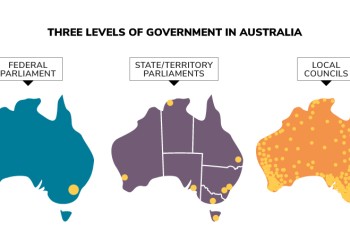
The three levels of government is a key feature of the Australian system of government. Discover the roles and responsibilities of the federal Parliament, state and territory parliaments and local councils, and how they work together to deliver services to Australians.
-
Referencing
Information to help you reference content from the PEO website.
-
quiz
Bills and laws
How does the Australian Parliament make laws for Australia? Revise your study of law-making with this quiz.
-
quiz
The role of political parties
Test your knowledge of political parties in the Australian Parliament with this fun quiz. It includes key parliamentary terms such as 'hung parliament' and 'crossing the floor'.
-
quiz
Three levels of government
Australia has three levels of government that work together to provide Australians with the services they need. Learn more about the three levels of government with this quiz.
-
Federation
Federation is the process by which 6 partly self-governing British colonies decided to form a new nation. Australia was created by peaceful means as an Act of the British Parliament—the result of much consideration and debate.
-
Year 6
The PEO has a range of resources to assist teachers in their delivery of the content descriptions for the Civics and Citizenship subject of the Year 6 HASS learning area in the Australian Curriculum V9.0.
-
Year 9
The PEO has a range of resources to assist teachers in their delivery of the content descriptions for the Year 9 Civics and Citizenship learning area in the Australian Curriculum V9.0.
-
Having your say
Explore Australia’s system of government with these adaptable classroom activities.
-
quiz
The House of Representatives
How much do you know about the House of Representatives – one of the two houses of the Australian Parliament? Test your knowledge with this fun quiz.
-
Cabinet extension activity
Cabinet rarely has only one policy proposal to debate and decide upon. In reality, ministers have to balance many priorities when making decisions. Go further and challenge your student Cabinet with this activity.
-
Year 4
The PEO has a range of resources to assist teachers in their delivery of the content descriptions for the Civics and Citizenship subject of the Year 4 HASS learning area in the Australian Curriculum V9.0.
-
interactive
Three levels of government
Explore Australia’s three levels of government with your class with this interactive poster. Use the teaching notes and activities to support your students' learning.
-
interactive
The House of Representatives
Discover the people who work in the House of Representatives with this interactive poster. Highlight the groupings of members and test yourself on who sits where. Use the teaching notes and activities to support your students' learning.
-
interactive
Forming the Australian government
Find out how the Australian government is formed and who makes up the Executive with this interactive poster. Use the teaching notes and activities to support your students' learning.
-
quiz
Knowledge check: democracy
How much do you know about Australia's democracy? Test your knowledge with this fun quiz.
-
Constitution
Part I
-
Constitution
Part IV
-
Constitution
Chapter III
The role of the courts
-
Constitution
Chapter VI
How new Australian States can be formed
-
Constitution
Schedule
Oath
I, A.B., do swear that I will be faithful and bear true allegiance to Her Majesty Queen Victoria, Her heirs and successors according to law. SO HELP ME GOD!
Affirmation
I, A.B., do solemnly and sincerely affirm and declare that I will be faithful and bear true allegiance to Her Majesty Queen Victoria, Her heirs and successors according to law.
(NOTE – The name of the King or Queen of the United Kingdom of Great Britain and Ireland for the time being is to be substituted from time to time.… -
video
The Senate
Discover the role and work of the Australian Senate with this introductory video.
-
video
The House of Representatives
Discover the role and work of the Australian House of Representatives with this introductory video.
-
video
The Constitution
This short video introduces the Australian Constitution – the rules by which Australia is run.
-
video
Three levels of government
Get an introduction to the three levels of government with this short video. It explores the areas each level can make laws about.
-
video
Role-play the Parliament: House of Representatives
This video demonstrates a House of Representatives parliamentary role-play, where students can learn how new laws are made in the Australian Parliament. It outlines lesson content and what preparation is required to use this immersive learning strategy in a classroom.
-
video
Role-play the Parliament: Senate
This video demonstrates a Senate parliamentary role-play, where students can learn how new laws are made in the Australian Parliament. It outlines lesson content and what preparation is required to use this immersive learning strategy in a classroom.
-
video
Role-play the Parliament: Committee
This video demonstrates a committee role-play, where students can learn how the Australian Parliament investigates bills and issues. It outlines lesson content and what preparation is required to use this immersive learning strategy in a classroom.
-
video
Role-play the Parliament: the role-play in action
This video shows a snapshot of a parliamentary role-play in the Education Centre at Australia’s Parliament House.
-
video
Making a law
Get an introduction to the law-making process of the Australian Parliament with this short video. It includes all the law-making steps in the Senate and House of Representatives.
-
video
The opening of a new Parliament
There are many steps in the process of opening a new parliament. Find out the timings, traditions and requirements of establishing a new Australian Parliament with this in-depth video.
-
video
Parliamentary committees
Explore how committees in the Australian Parliament are formed, their function and how they support the work of the Senate and House of Representatives with this explanatory video.
-
video
Question Time in the Australian Parliament
In Question Time members of parliament ask the government to explain its actions and decisions. This video explores the purpose, function and format of Question Time in the Senate and House of Representatives.
-
video
Get involved
Explore ways you can get involved in the work of Parliament with this in-depth video. Find out how you can get informed about the work of the Parliament, contact and vote for members of parliament, petition the Parliament and participate in parliamentary inquiries.
-
video
One voice for many
This video explores representation. It can be used as a visual aid in discussing representation with students.
-
video
Australia's Federation
Discover the story behind Federation in Australia with this introductory video.
-
video
Usher of the Black Rod video
Meet the Usher of the Black Rod in this informative video. Learn about their role in the Senate and the department, the symbolism of the Black Rod and the history of the position.
-
video
What is Parliament?
Discover the structure and key functions of the Australian Parliament with this short video. It introduces the Parliament’s roles of law-making, representing Australians, the formation of government and checking the work of the government.
-
video
1967 referendum
In 1967 the majority of Australians voted to change the Australian Constitution to count Aboriginal and Torres Strait Islander peoples in the national census. This video from the ABC’s Behind the News explores how the 1967 referendum was part of a movement for Aboriginal and Torres Strait Islander peoples’ rights.
-
video
Preferential voting
When you vote for your local member of the House of Representatives you need to decide who you like the most, the second most and so on. Discover why preferences matter on election day with the ABC’s Behind the News.
-
video
Levels of government
In a land called Australia, 3 superheroes fight for the people. Discover their powers and those of the three levels of government they are named after with this video. From the ABC’s Behind the News.
-
video
The role of the Governor-General
Meet Her Excellency, the Governor-General and learn about their role in the Parliament as the representative of Australia's monarch.
-
video
Canberra from above
Discover where Australian Parliament House sits within the capital city of Australia, Canberra.
-
Tenterfield Oration
-
Invalid and Old-age Pensions Act 1908
-
Euthanasia Laws Act 1997
-
Commonwealth Electoral Legislation Amendment Act 1983
-
New national anthem
-
First woman Speaker
-
Australia declares war
-
Australian Marriage Law Postal Survey
-
First Indigenous member of the House of Representatives
-
Federation referendum
-
Defence Act 1903
-
1916 conscription plebiscite
-
Change of voting age
-
Medicare starts
-
Social welfare referendum
-
Flags Act 1953
-
Creation of Australia
-
Pacific Islanders Labourers Act 1901
-
Seat of Government Act 1908
-
Provisional Parliament House opens
-
Nationality and Citizenship Act 1948
-
Harvester Judgement
-
Territory senators
-
First election using preferential voting
-
Freedom of Information Act
-
Commonwealth Electoral Act 1962
-
Prime Minister Bruce loses his seat
-
Yirrkala petitions
-
Australian Constitution
-
Compulsory enrolment for elections
-
Proclamation of Commonwealth Territories
-
First woman President of the Senate
-
First Indigenous member of parliament
-
Immigration Restriction Act 1901
-
First woman appointed to the High Court
-
The Premiers’ Plan
-
The Whitlam dismissal
-
First Australian-born Governor-General
-
Commonwealth Franchise Act 1902
-
Maternity Allowance Act 1912
-
Australasian Federation Conference
-
Judiciary Act 1903
-
Commonwealth Electoral Act 1924
-
Commonwealth Bank Act 1911
-
Federal press gallery established
-
First parliamentary broadcast
-
First woman appointed to a Cabinet position
-
Snowy Mountains Hydro-Electric Power Act 1949
-
Commonwealth Workmen’s Compensation Act 1912
-
Australia becomes a founding member of the United Nations
-
Internment of enemy aliens
-
ANZUS treaty
-
Australia's first peacekeeping commitment
-
The 'Petrov Affair'
-
Marriage bar abolished
-
Gove Land Rights Case
-
First Indigenous woman senator
-
Minority government
-
National Apology to Victims and Survivors of Institutionalised Child Sexual Abuse
-
First woman Governor-General
-
Treaty of Versailles
-
First double dissolution
-
Western Australian secession referendum
-
Australian Broadcasting Commission Act 1932
-
The National Disability Insurance Scheme begins
-
Sex Discrimination Act 1984
-
First woman Prime Minister
-
Opening of Parliament begins with Welcome to Country
-
Apology to the Stolen Generations
-
First women in the Australian Parliament
-
Joint sitting of Parliament
-
Australian Parliament House opened
-
First Indigenous woman member of the House of Representatives
-
Goods and Services Tax
-
Administration of Papua
-
First federal referendum
-
Centenary of Federation
-
Republic referendum
-
Aboriginal Tent Embassy
-
NT granted self-government
-
Australia's first overseas territory
-
School Chaplaincy Case
-
Wireless Telegraphy Act 1905
-
High Court rules on the Franklin Dam Case
-
Main Roads Development Act 1923
-
Prime Minister Joseph Lyons dies
-
Archives Act 1983
-
First woman leader of a federal political party
-
War Precautions Act 1914
-
Mabo decision
-
First Vietnam moratorium march
-
Advisory War Council
-
The Boilermakers Case
-
1967 referendum
-
Statute of Westminster Adoption Act 1942
-
Income Tax (War-Time Arrangements) Act
-
Copyright Act 1968
-
Equal Pay Case
-
Gurindji walk off Wave Hill
-
Migration Act 1966
-
Bank Nationalisation Case
-
Uluru Statement from the Heart
-
The Conciliation and Arbitration Act 1904
-
ACT granted self-government
-
End of appeals from the High Court to the Privy Council
-
Australia Act 1986
-
Convention on the Rights of the Child
-
Federation Chamber formed
-
Colombo Plan
-
The Engineers Case
-
Hansard published online
-
Aboriginal and Torres Strait Islander Voice referendum
-
National Parks and Wildlife Conservation Act 1975
-
National Firearms Agreement
-
United Nations Declaration on the Rights of Indigenous Peoples
-
Communist Party Dissolution Act 1950
-
The Labor Party split
-
Corowa Conference
-
Lange v ABC
-
States Grants (Science Laboratories and Technical Training) Act 1964
-
Online Safety Amendment (Social Media Minimum Age) Act 2024
-
AC9HS6K06
AC9HS6K06 - The key institutions of Australia’s system of government, how it is based on the Westminster system, and the key values and beliefs of Western democracies. -
AC9HS3K06
AC9HS3K06 - Who makes rules, why rules are important in the school and/or the local community, and the consequences of rules not being followed. -
AC9HS3K07
AC9HS3K07 - Why people participate within communities and how students can actively participate and contribute to communities. -
AC9HS6K07
AC9HS6K07 - The roles and responsibilities of the 3 levels of government in Australia. -
AC9HC7K01
AC9HC7K01 - The key features of Australia's system of government, including democracy, the Australian Constitution, responsible government and federalism. -
AC9HC7K02
AC9HC7K02 - The characteristics of Australia's democracy, including freedom of speech, association, assembly, religion and movement. -
AC9HC7K03
AC9HC7K03 - The key principles and features of the Australian legal system, including the Australian Constitution, the rule of law and the court system. -
AC9HC9K01
AC9HC9K01 - The role of the Australian Constitution in providing the basis for Australia’s federal system of government and democratic processes, including institutions, and the process for constitutional change through a referendum. -
AC9HC7K04
AC9HC7K04 - How Australia’s secular democracy and pluralist, multi-faith society draws upon diverse cultural origins, including Christian and Western heritage, distinct First Nations Australian histories and cultures, and migrant communities. -
AC9HC7K05
AC9HC7K05 - How values based on freedom, respect, fairness and equality of opportunity can support social cohesion and democracy within Australian society. -
AC9HC8K02
AC9HC8K02 - The role of political parties and independent representatives in Australian democracy, including elections and the formation of governments. -
AC9HC8K01
AC9HC8K01 - How Australians are informed about and participate in democracy -
AC9HC9K02
AC9HC9K02 - The legislative processes through which federal government policy is shaped, developed and implemented. -
AC9HC9K03
AC9HC9K03 - The key features and jurisdictions of Australia’s court system, and the operations of courts and tribunals. -
AC9HC8K03
AC9HC8K03 - The characteristics of laws and how laws are made in Australia through parliaments (statutory law) and through the courts (common law). -
AC9HC9K04
AC9HC9K04 - The role of courts, judges, lawyers and juries in trials, and the rights of the accused and the rights of victims. -
AC9HC9K05
AC9HC9K05 - How and why individuals and groups, including community, religious and cultural groups, participate in and contribute to civic life in Australia and to global citizenship. -
AC9HC9K06
AC9HC9K06 - The influence of a range of media, including social media, in shaping identity and attitudes to diversity. -
AC9HS4K07
AC9HS4K07 - The differences between “rules” and “laws”, why laws are important and how they affect the lives of people. -
AC9HS4K08
AC9HS4K08 - The roles of local government and how members of the community use and contribute to local services. -
AC9HS5K06
AC9HS5K06 - The key values and features of Australia’s democracy, including elections, and the roles and responsibilities of elected representatives. -
AC9HS5K07
AC9HS5K07 - How citizens (members of communities) with shared beliefs and values work together to achieve a civic goal. -
AC9HC10K01
AC9HC10K01 - The key features and values of Australia’s system of government compared with at least one other democratic or non-democratic system of government in the Asia-Pacific region. -
AC9HC8K04
AC9HC8K04 - The types of law in Australia, including criminal law and civil law, and the place of First Nations Australian customary law. -
AC9HC8K05
AC9HC8K05 - How culture and religion may influence individuals' and groups' perceptions and expressions of citizenship and their actions as citizens. -
AC9HC8K06
AC9HC8K06 - Different experiences of, perspectives on and debates about Australia’s national identity and citizenship, including the perspectives of First Nations Australians as owners of their respective nations, and of different migrant groups. -
AC9HC10K02
AC9HC10K02 - The Australian Government’s role and responsibilities at a regional and global level. -
AC9HC10K03
AC9HC10K03 - The role of the parliament and the High Court of Australia in protecting rights under the Constitution, common law, and through federal and state statute law. -
AC9HC10K04
AC9HC10K04 - How Australia’s international legal obligations shape Australian law and government policies, including those relating to First Nations Australians, and the issues related to the application of these obligations. -
AC9HC10K05
AC9HC10K05 - The challenges to and ways of sustaining a resilient democracy and a cohesive society in Australia and/or in our region or globally. -
introducing
Introducing ... the three levels of government
Begin your exploration of the three levels of government in Australia with this short introduction. Discover the responsibilities of the federal Parliament, state and territory parliaments and local government, and how they work together.
-
introducing
Introducing ... the Australian Constitution
Begin your exploration of the Australian Constitution with this short introduction. Learn how the Constitution came into effect and what it takes to change it.
-
introducing
Introducing ... Federation
Begin your exploration of Federation with this short introduction. Find out the arguments for Federation and the process that led to the creation of Australia.
-
introducing
Introducing ... rules and laws
Begin your exploration of rules and laws with this short introduction. Find out the differences between rules and laws, and who needs to follow them.
-
introducing
Introducing ... Australia's system of government
Begin your exploration of the features of Australia’s system of government with this short introduction. Discover how power is shared and managed between different groups in Australia.
-
Quizzes
Have a go at these quizzes about the Australian Parliament. You might even learn something you didn’t know! Topics include the three levels of government, separation of powers and the Australian Constitution.
-
factsheet
Clerks
Understand the role of the Clerks in the Senate and House of Representatives with this fact sheet. Learn about their work and the history of their positions.
-
factsheet
President of the Senate
Understand the role of the President of the Senate with this fact sheet. It includes information about how the President is elected and their role in the Senate.
-
Negotiate in National Cabinet
Role play the federal and state heads of government as they work together to make decisions about issues that affect the whole of Australia.
-
statistics
Parliamentary statistics
Keep up-to-date with the current numbers and work of the 48th Australian Parliament with these facts and figures.
-
Prepare for your program
Visiting us at Australian Parliament House? Find ideas and resources – including a social story – to help students prepare.
-
Make a law: House of Representatives
Discover how bills - proposed laws - are introduced, debated and voted on in the House of Representatives by turning your class into a Parliament and doing it yourselves.