Speaker of the House of Representatives
Understand the role of the Speaker of the House of Representatives with this fact sheet. It includes information about how the Speaker is chosen, their role in the House and the history of the position.
What will I learn?
- The Speaker of the House of Representatives runs the meetings in the House.
- The Speaker is chosen by the members of the House of Representatives.
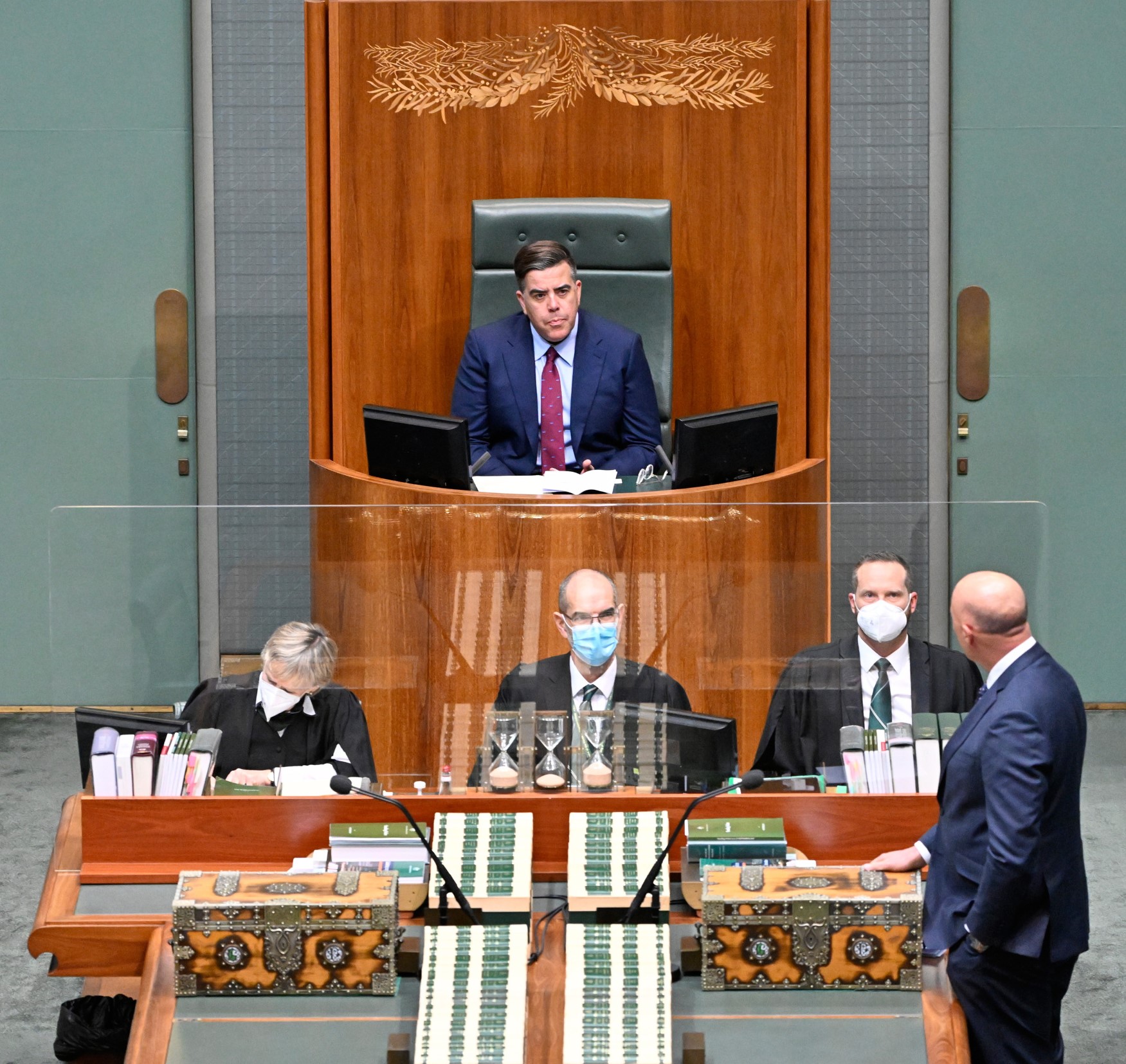
The Speaker of the House of Representatives
Penny Bradfield/DPS Auspic
The Speaker of the House of Representatives
Penny Bradfield/DPS Auspic
Description
In the House of Representatives, the Speaker sits in a large, elevated, wooden and green leather chair behind a desk. From this position, the Speaker can see and hear all other members and all other members can see the Speaker. The Speaker is a member of the House of Representatives who has been chosen to run the meetings of the House.
Copyright information
Permission should be sought from DPS AUSPIC for third-party or commercial uses of this image. To contact DPS AUSPIC email: auspic@aph.gov.au or phone: 02 6277 3342.
Who is the Speaker of the House of Representatives?
The Speaker is the Presiding Officer of the House of Representatives. They are a member of the House of Representatives who has been chosen to run the meetings of the House.
Role
The Speaker has many responsibilities. Their role in the House of Representatives is to run meetings of the House so that they are fair and orderly, making sure the rules of the House – the standing orders – are followed. They:
- chair meetings of the House of Representatives
- call on members when it is their turn to speak
- manage debates by monitoring the timing of members’ speeches
- conduct votes in the House and announce the results
- maintain order, issue warnings if members have broken the rules and direct members to leave the House when necessary
- decide if answers are relevant and if questions fit within the rules during Question Time.
In addition to running the meetings in the House, they:
- take part in ceremonial occasions, such as hosting foreign heads of state who speak to the Australian Parliament
- manage the Department of the House of Representatives, including budgets, staffing and allocation of offices
- work with the Presiding Officer of the Senate, the President of the Senate, to maintain services in Parliament House, including broadcasting, computing services and the cleaning and upkeep of the building
- are the spokesperson for the House of Representatives when working with other parts of the Parliament, the government, and others.
The Speaker does not usually participate in debates in the House. Section 40 of the Australian Constitution says that they do not vote unless there is a tie, in which case the Speaker has the deciding vote.
The Speaker's chair is at the front of the House of Representatives facing the U-shaped seating. The Speaker can see and hear everything that happens, and everyone in the House can see the Speaker. The Speaker's microphone is always on, unlike other members of the House, so the Speaker can always be heard and can keep order.
Choosing the Speaker
The House of Representatives cannot run without a Speaker. After a federal election, members of the House of Representatives vote to choose the Speaker. The Speaker is an experienced member of parliament, usually nominated by the government. They are expected to treat all members of the House fairly and equally.
A Deputy Speaker is elected to help the Speaker. There is also a group of members of the House who can act as Deputy Speaker to share the work of running the meetings in the House of Representatives throughout the day.
History
The role of Speaker dates back to 13th century England. In early English parliaments the Speaker told the monarch about the decisions of the parliament. The role of the Speaker in those times was a dangerous one. Some Speakers were murdered, put in prison, or exiled – sent away – for speaking on behalf of a parliament that challenged the authority of the monarch.
The symbol of the Speaker’s authority to run meetings of the House – the Mace – is also a tradition that has come from the British Parliament. It sits on the central table in the House whenever the Speaker or their deputy is in the Chair and the House of Representatives is meeting.