Why is the voting system different between the House of Representatives and the Senate?
Thank you for your question Susan.
You are right – the voting systems for the House of Representatives and the Senate are quite different. This is because voters are electing one member to represent them in the House, but multiple senators to represent them in the Senate at the same time.
In the House of Representatives one candidate is elected from each electorate. The preferential voting system used in the House results in the election of the candidate supported by the majority of their electorate.
The proportional voting system used for the Senate enables multiple candidates to be elected at each election. At a half-Senate election, voters are electing 6 senators to represent their state or, if they live in the Northern Territory or the Australian Capital Territory, 2 senators to represent their territory. Senators don’t need to be supported by the majority of voters in their state or territory. Instead, they need to receive a quota – a set percentage – of the votes in their state or territory.
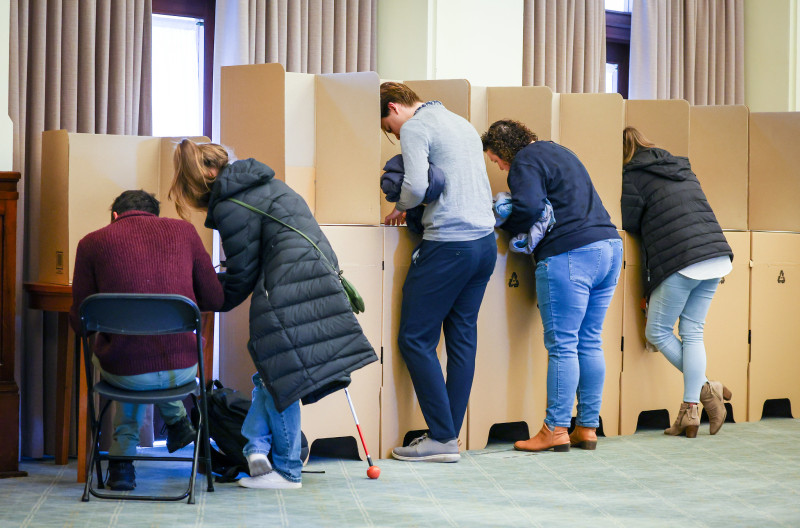
People voting
Australian Electoral Commission
People voting
Australian Electoral Commission
Description
Five people in a polling place completing ballot papers in cardboard voting booths. Voters are separated in their own booth to ensure their vote is secret. One voter is seated and assisted by someone else.
Permission should be sought from the Australian Electoral Commission (AEC) for third-party or commercial uses of this image. To contact the AEC email: media@aec.gov.au or phone: 13 23 26.