What happens if members disagree with the Speakers ruling?
Thanks for your question, Jessica.
If a member of parliament disagrees with a ruling made by the Presiding Officer (the Speaker of the House of Representatives or the President of the Senate), they can move a ‘motion of dissent.’ This is a formal way of expressing disagreement with the ruling. The motion is then debated and voted on by members. If the motion of dissent is agreed to by a majority, the ruling is overturned.
Alternatively, a member of parliament can move a ‘motion of no confidence’ in the Presiding Officer. If this motion is agreed to, the Presiding Officer would lose their position, and the House or Senate would elect a new Speaker or President. These types of motions are very rare.
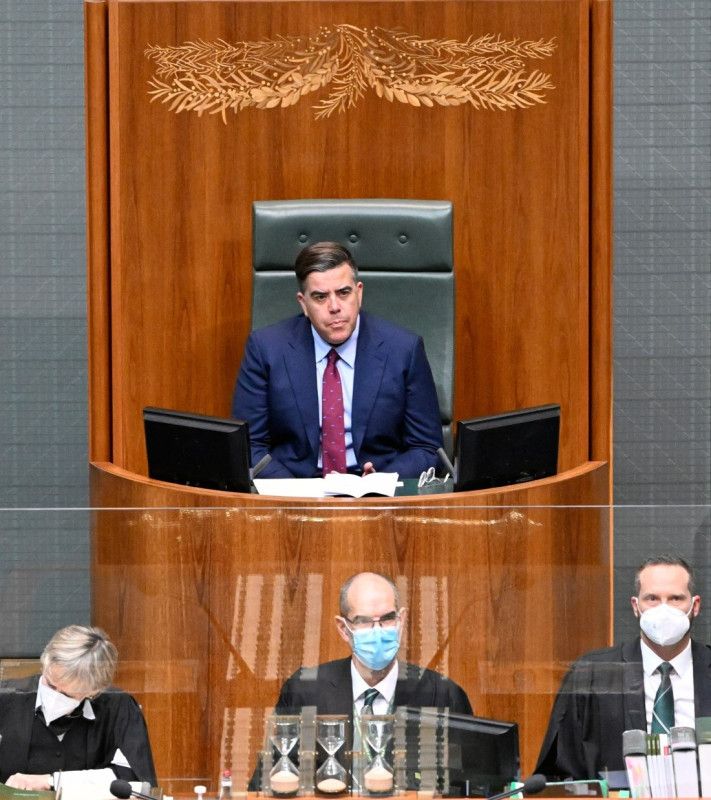
The Speaker of the House of Representatives in their chair
Penny Bradfield/DPS AUSPIC
The Speaker of the House of Representatives in their chair
Penny Bradfield/DPS AUSPIC
Description
The Speaker of the House of Representatives sitting in his chair in the House of Representatives. The Speaker's chair is at the front of the House of Representatives facing the U-shaped seating. From their chair, the Speaker can see everyone in the House.
Permission should be sought from DPS AUSPIC for third-party or commercial uses of this image. To contact DPS AUSPIC email: auspic@aph.gov.au or phone: 02 6277 3342.