How do political parties work in Parliament?
In the Australian Parliament, members of the same party generally work as a team. Political parties aim to get members elected to Parliament so their ideas can affect the way Australia is governed. The more members of a party get elected, the more influence it will have in Parliament. This is because party members usually vote the same way on issues and bills – ideas for new laws.
The party (or coalition of parties) that has the support of a majority of members in the House of Representatives forms government. The government introduces almost all bills and is responsible for explaining its decisions in Parliament. The next largest party or coalition becomes the opposition, which questions the government and offers alternative ideas.
In Parliament, because parties often have several members elected, they can divide responsibilities and work on a wider range of issues at the same time. Party whips also help manage speaking times in the Senate and House of Representatives and make sure members are present for votes.
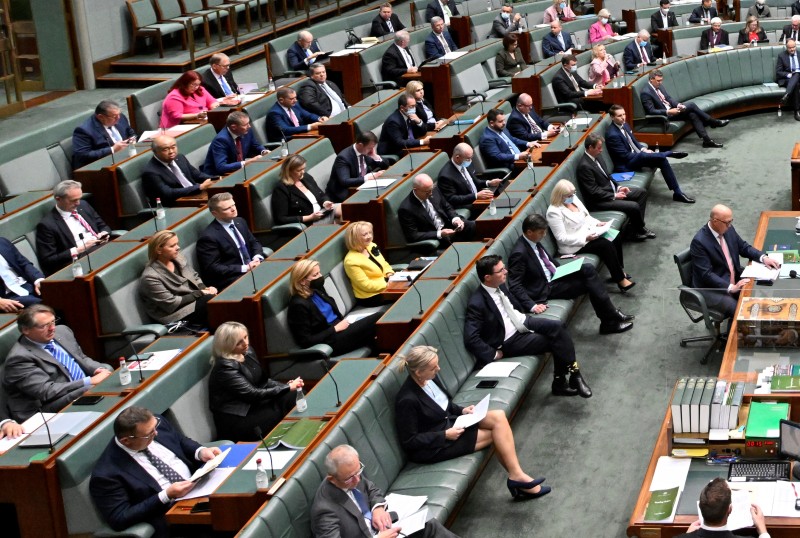
The opposition side of the House of Representatives
Belinda Hogg/DPS Auspic
The opposition side of the House of Representatives
Belinda Hogg/DPS Auspic
Description
Opposition members sit together in rows in the House of Representatives during a meeting. The Leader of the Opposition sits in a chair at the main table. The opposition is the largest party or coalition of parties that does not have the support of the majority of members in the House of Representatives.
Permission should be sought from DPS AUSPIC for third-party or commercial uses of this image. To contact DPS AUSPIC email: auspic@aph.gov.au or phone: 02 6277 3342.