How do people decide who to vote for in a federal election?
Each Australian voter makes their own choice about who to vote for. There is no single way to decide, and different voters look at different things when making their decision.
Some voters research the policies of candidates and political parties. Policies are the ideas and plans candidates and political parties have for how the country should be run or what changes they want to make. This information is often available on candidate or party websites. Voters might think about the issues that matter most to them, such as the environment, cost of living, health or education, and consider which candidate or party best matches their views.
During an election campaign, voters may use information shared by candidates and parties to help make their decision. Candidates often explain their ideas in speeches, through television, radio or newspaper interviews, in advertising and on social media. Some voters also talk about their choices with family, friends or people in their community.
Voters might also consider a candidate’s past work in the community or their previous work in Parliament. They might consider what the candidate has done and whether they support the candidate’s actions and decisions.
On election day, it is up to each voter to decide who they will vote for to represent them and make laws in Parliament.
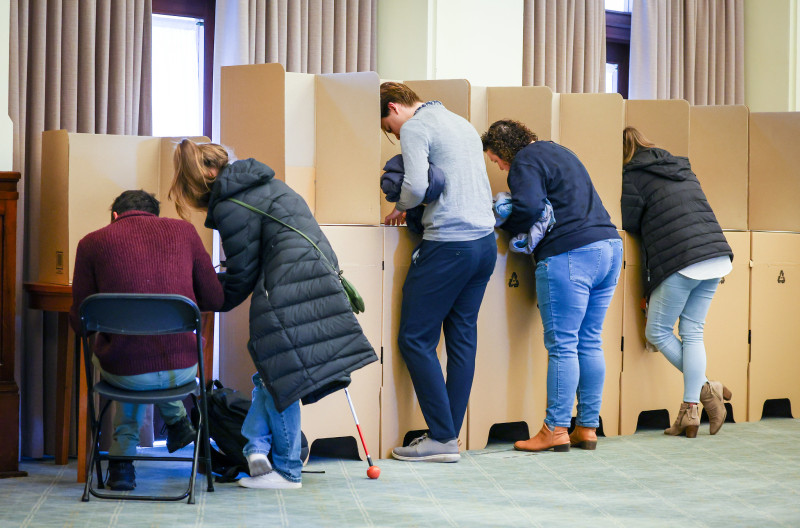
People voting
Australian Electoral Commission
People voting
Australian Electoral Commission
Description
Five people in a polling place completing ballot papers in cardboard voting booths. Voters are separated in their own booth to ensure their vote is secret. One voter is seated and assisted by someone else.
Permission should be sought from the Australian Electoral Commission (AEC) for third-party or commercial uses of this image. To contact the AEC email: media@aec.gov.au or phone: 13 23 26.