Why is the Senate called the upper house and the House of Representatives called the lower house?
The terms ‘upper house’ and ‘lower house’ come from the British Parliament, where the House of Lords is known as the upper house and the House of Commons is known as the lower house.
When Australia set up its own Parliament, it adopted many features of the British or ‘Westminster’ system, including these terms. The House of Representatives was based on the House of Commons, so is sometimes referred to as the lower house. The Senate shares some features with the House of Lords, so is sometimes referred to as the upper house.
These names do not reflect power or importance of the Senate and House of Representatives – both have an important role in making laws for Australia. Bills can be introduced in either the Senate or House (except for money bills, which must begin in the House), and both must agree to a bill before it can become law.
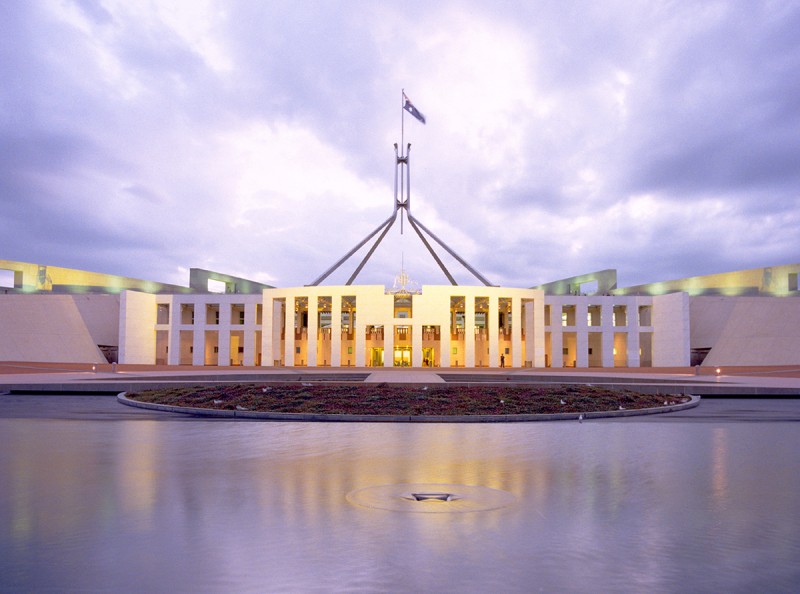
Australian Parliament House
DPS Auspic
Australian Parliament House
DPS Auspic
Description
The front of Australian Parliament House, Canberra. This building is where the Australian Parliament meets.
Permission should be sought from DPS AUSPIC for third-party or commercial uses of this image. To contact DPS AUSPIC email: auspic@aph.gov.au or phone: 02 6277 3342.