Who comes up with new bills to take to the House of Representatives?
Thanks for your question.
Ideas for bills – proposed laws – come from different sources. Most bills are government bills and are introduced by a minister, who is responsible for the bill.
In coming up with ideas for bills, ministers:
- work with their department to identify problems facing Australia and solutions to these problems
- refer to party policy – for example, if during the election campaign, the party announced it would lower the voting age to 16, once in government, it would introduce a bill on this topic
- act on a recommendation from a parliamentary committee – the Parliament sometimes asks a committee to investigate an issue, and the committee might then suggest a new law to fix the issue
- draw on suggestions from interest groups, including community, business and lobby groups, who may have ideas for improving or changing a particular area of Australian law
- respond to feedback from members of parliament.
Most government bills start in the House of Representatives because this is where more ministers sit, but they can also be introduced by ministers in the Senate.
Other members of parliament can also introduce their own bills. These are called private members’ or private senators’ bills. Usually, ideas for private bills are also based on party policy, committee recommendations or suggestions from interest groups.
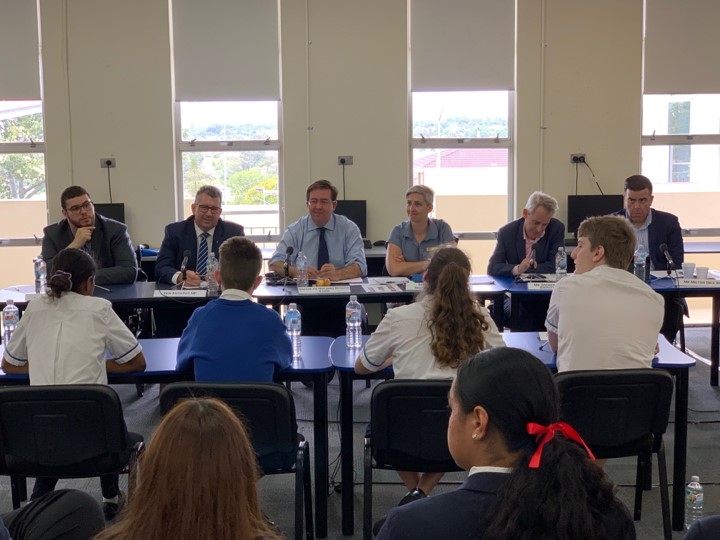
A committee at a school
Senate Research Section
A committee at a school
Senate Research Section
Description
A parliamentary committee holding a hearing at a high school. A group of students are participating in the hearing, providing information or answering questions from members of the Australian Parliament. The members of Parliament sit opposite the students and listen to their information and responses.