How many clocks are there in Parliament House? What makes the bells on the clocks ring? Why do the bells ring for four minutes?
There are around 2,500 clocks in Australian Parliament House, fitted with 2 flashing lights which call members of parliament to the Senate or House of Representatives. One light flashes green for the House and the other flashes red for the Senate. When the lights are activated, the sound of a bell rings through loudspeakers set in the ceiling near all the clocks in the building, which are controlled and synchronised by a master clock. The master clock also operates the red and green lights. The Clerks are responsible for activating the lights and bells, which they can control from their desks in the Senate or House. They activate the bells and lights at the direction of the President of the Senate or Speaker of the House of Representatives.
The bells ring for 5 minutes at the start of the meeting of the Senate or House of Representatives. They ring for 4 minutes if there is a division – a counted vote. Members of parliament get 4 minutes to reach either the Senate or House before the vote is held. This is enough time to get to the chamber from anywhere in Parliament House.
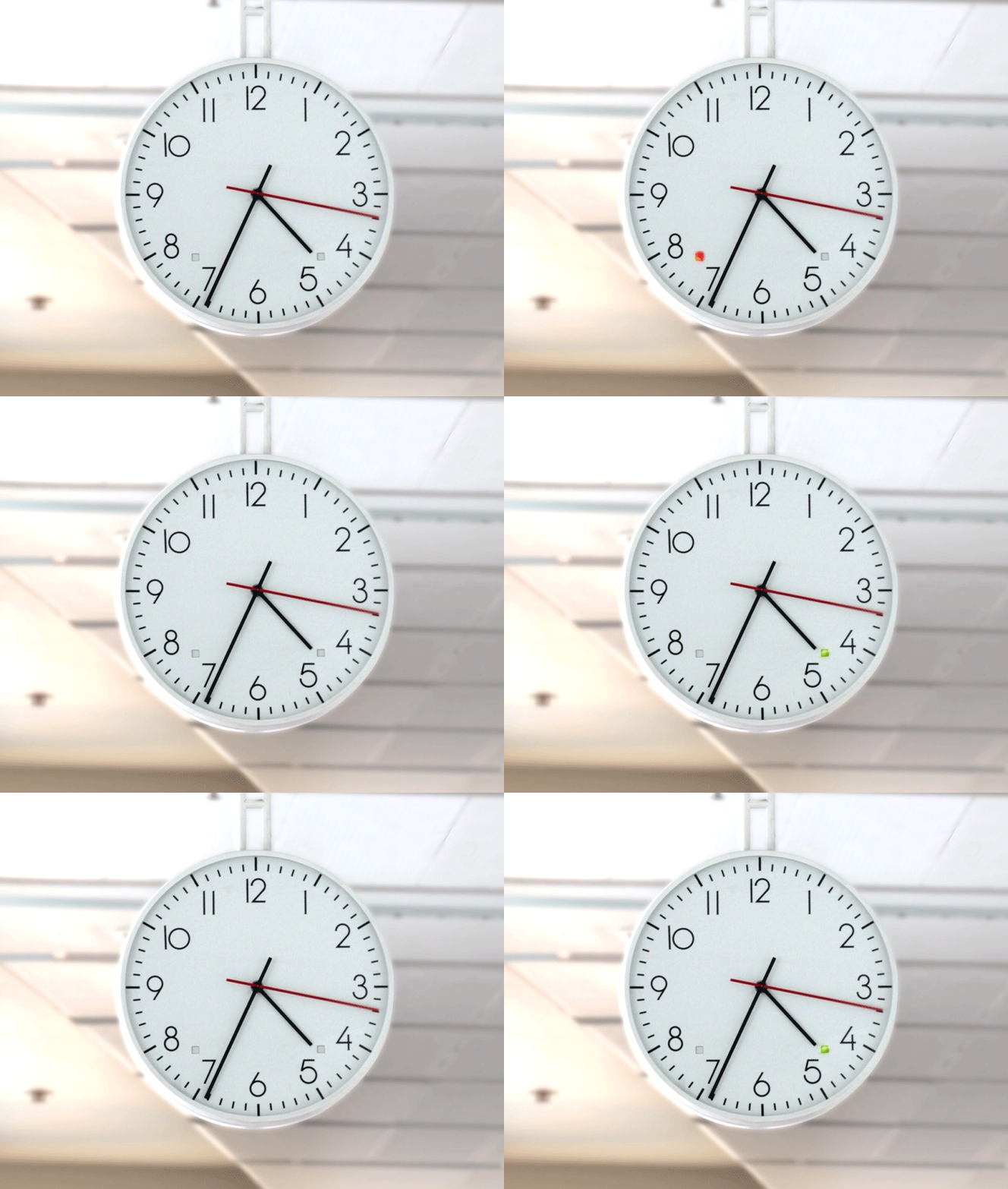
Lights flashing on a clock at Parliament House
Parliamentary Education Office (peo.gov.au)
Lights flashing on a clock at Parliament House
Parliamentary Education Office (peo.gov.au)
Description
In Australian Parliament House, the clocks show when a division – a formal vote – is about to happen. A red light between the 7 and 8 on the clock face flashes when a vote is to occur in the Senate. A green light between the 4 and 5 flashes to indicate a vote in the House of Representatives.

This work is licensed under a Creative Commons Attribution-NonCommercial-NoDerivatives 4.0 International License.
You are free to share – copy and redistribute the material in any medium or format.
The licensor cannot revoke these freedoms as long as you follow the license terms.
Attribution – You must give appropriate credit, provide a link to the license, and indicate if changes were made. You may do so in any reasonable manner, but not in any way that suggests the licensor endorses you or your use.
Non-commercial – You may not use the material for commercial purposes.
No derivatives – If you remix, transform, or build upon the material, you may not distribute the modified material.
No additional restrictions – You may not apply legal terms or technological measures that legally restrict others from doing anything the license permits.
Waiver – any of the above conditions can be waived if you get permission from the copyright holder.