factsheet
Law-making
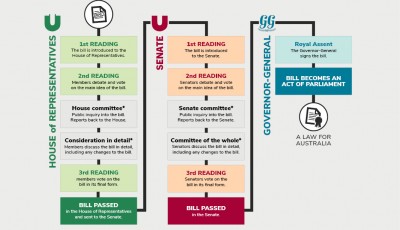
This fact sheet explains the law-making process in the Australian Parliament.
Begin your exploration of rules and laws with this short introduction. Find out the differences between rules and laws, and who needs to follow them.
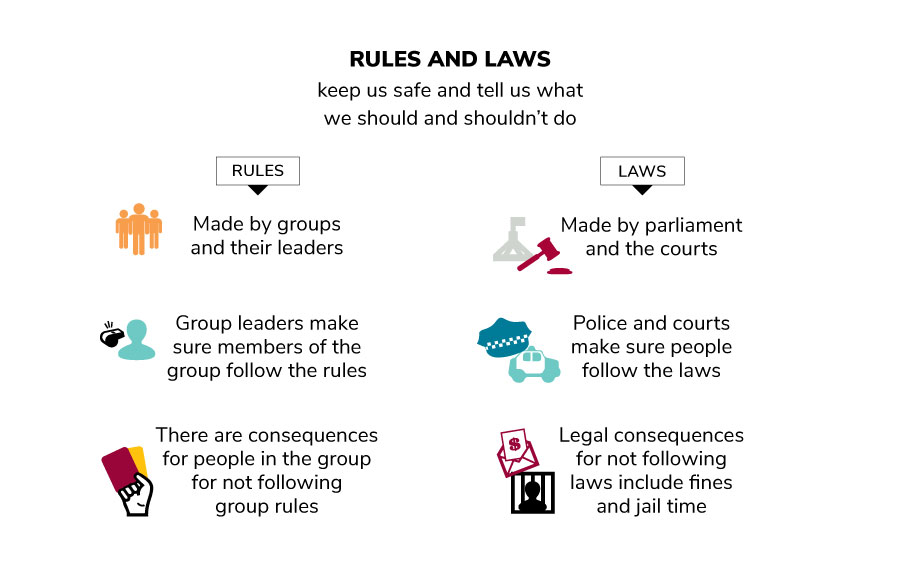
Rules and laws are different types of instructions that are designed to help us understand how to participate safely and fairly in groups and society. Though rules and laws can be similar, the consequences of not following laws are much more serious.
Rules and laws
Parliamentary Education Office (PEO.GOV.AU)
Parliamentary Education Office (PEO.GOV.AU)
The difference between rules and laws:
Rules
Laws
Both rules and laws

This work is licensed under a Creative Commons Attribution-NonCommercial-NoDerivatives 4.0 International License.
You are free to share – copy and redistribute the material in any medium or format.
The licensor cannot revoke these freedoms as long as you follow the license terms.
Attribution – You must give appropriate credit, provide a link to the license, and indicate if changes were made. You may do so in any reasonable manner, but not in any way that suggests the licensor endorses you or your use.
Non-commercial – You may not use the material for commercial purposes.
No derivatives – If you remix, transform, or build upon the material, you may not distribute the modified material.
No additional restrictions – You may not apply legal terms or technological measures that legally restrict others from doing anything the license permits.
Waiver – any of the above conditions can be waived if you get permission from the copyright holder.
Did you know?
Australia’s system of law came from Britain. However, Aboriginal and Torres Strait Islander peoples have customary laws dating back thousands of years. Across the country, different groups have different laws. These laws are not written down, but community members share with each other how to behave and the consequences of not following the laws.